
Collaborative Research Center 1507
Membrane-Associated Protein Assemblies, Machineries and Supercomplexes
Protein assemblies and molecular machineries in cellular membranes are central to essential life processes. They establish homeostasis in compartmentalized cells, transduce energy, translocate nutrients and metabolites, control the communication within and between cells, and mediate interactions with pathogens. The CRC aims for an in-depth, quantitative understanding of the structure, dynamics, and function of key membrane-associated assemblies, machineries, and supercomplexes as a basis for a multiscale decoding of the associated cellular processes. Despite their pivotal role, protein assemblies and machineries associated with cellular membranes are intrinsically difficult to study and remain poorly understood. Our CRC aims to discover the organizational principles and operational mechanisms of protein assemblies and machineries at and across compartmentalization boundaries.
GOVERNING BODIES OF THE CRC 1507
Head of CRC 1507:
Prof. Dr. Robert Tampé
Steering Board:
Prof. Dr. Amparo Acker-Palmer, Prof. Dr. Ana J. García Sáez
Prof. Dr. Inga Hänelt, Prof. Dr. Clemens Glaubitz,
Prof. Dr. Mike Heilemann, Prof. Dr. Gerhard Hummer
Scientific Coordination: Dr. Katrin Rettig
Management (Office of the CRC 1507): Inga Nold, Andrea Pott
Head of Integrated Research Training Group:
Prof. Dr. Inga Hänelt
Coordination of Integrated Research Training Group:
Dr. Dorith Wunnicke
Steering Board of Integrated Research Training Group:
Dr. Rana Hussein Ali, Prof. Dr. Volker Zickermann
Project leader of Cryo-EM Infrastructure (Z02):
Prof. Dr. Robert Tampé
Scientific Coordination of Z02: Dr. Lukas Sušac
Application Specialist, Z02: Dr. Fernando Ormeno
Cluster I
Intermembrane communication.
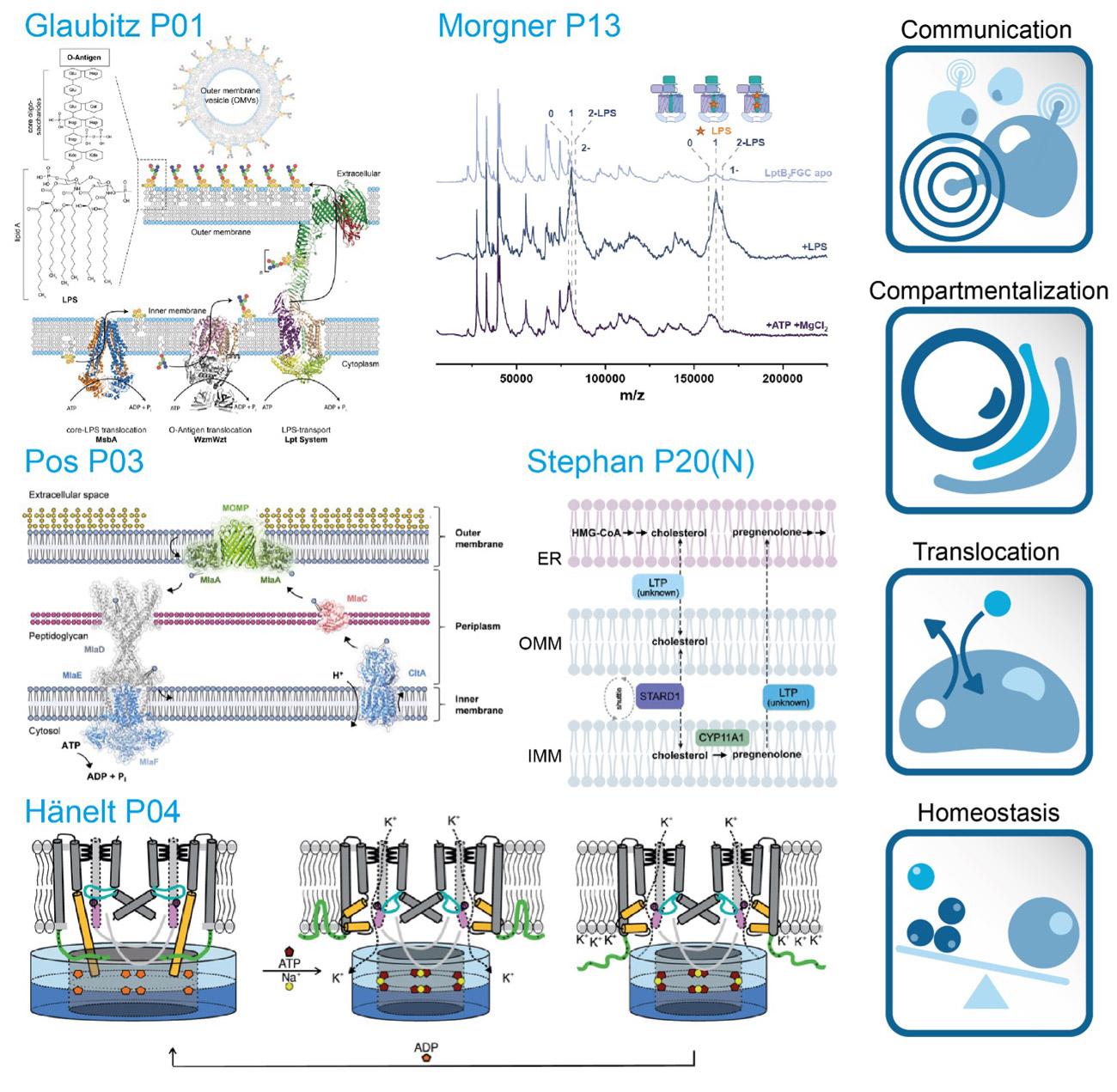
The projects of Cluster I use a full range of structural, spectroscopic, and mechanistic methods to resolve intermembrane communication in Gram-negative bacteria (Glaubitz P01, Pos P03, and Morgner P13), ER-outer-/inner-mitochondrial (OMM/IMM) membrane communication (Stephan P20), or intercellular electric signaling in biofilms and osmoregulation (Hänelt P04). The projects are tightly linked by overarching questions and topics, including intermembrane communication, compartmentalization, membrane translocation, and cell homeostasis.
Cluster II
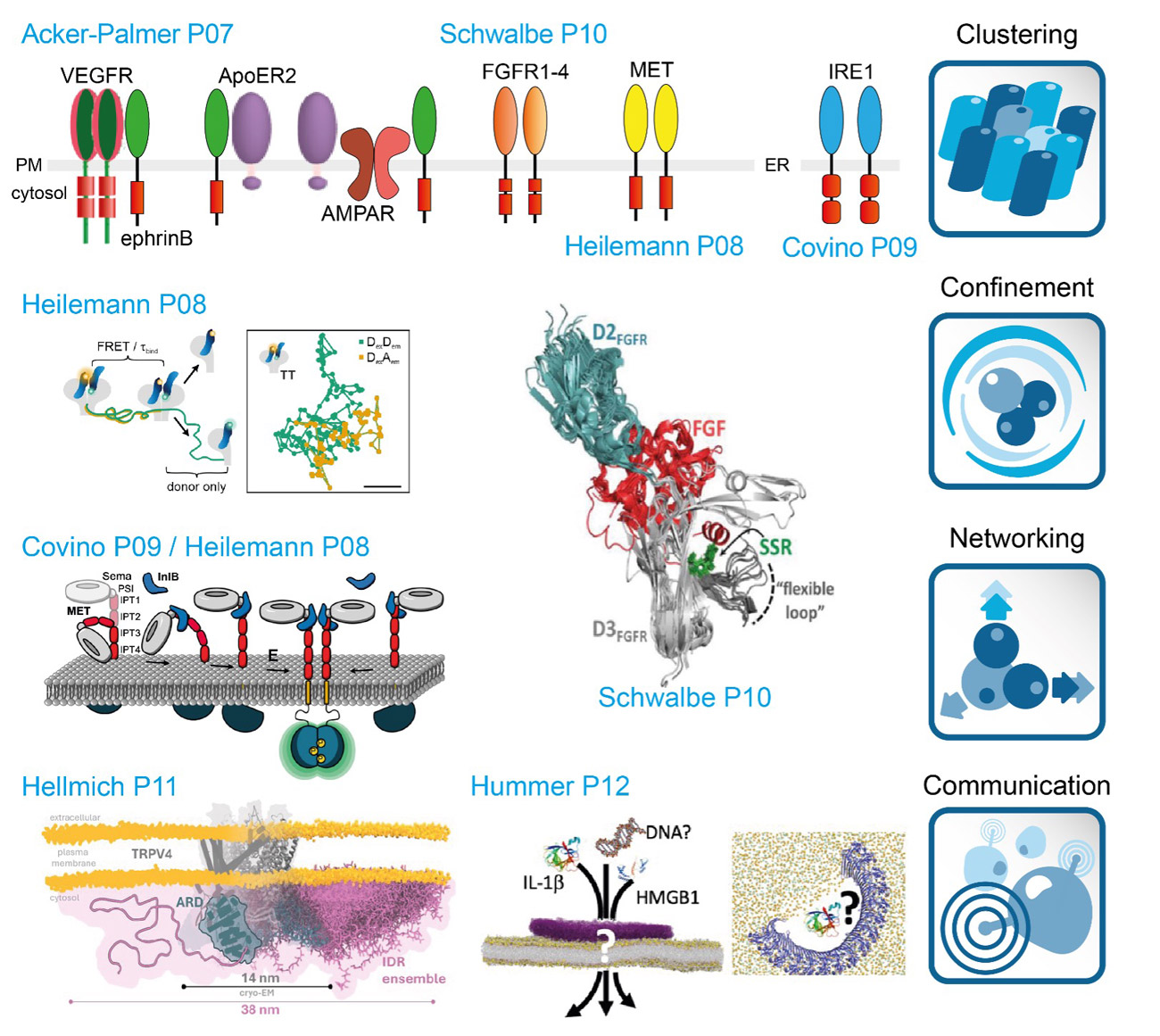
Dynamics and molecular assembly / Receptor dynamics as drivers of membrane protein diversity.
Membrane receptors such as MET, Eph, IRE1, ion channel complexes such as TRPV4, and membrane-associated pore complexes build “nano- or microscale reaction containers” via a network of transient interactions. The stoichiometry of these dynamic assemblies and the common fundamental mechanisms of protein organization shared by different receptors and cell types will be addressed by state-of-the-art methodology in experiment and theory. We will explore how membrane-associated assemblies build up functional scaffolds and regulate specific interactions in time and space.
Cluster III
Membrane-associated machineries and supercomplexes / Overview of common topics and overarching questions.
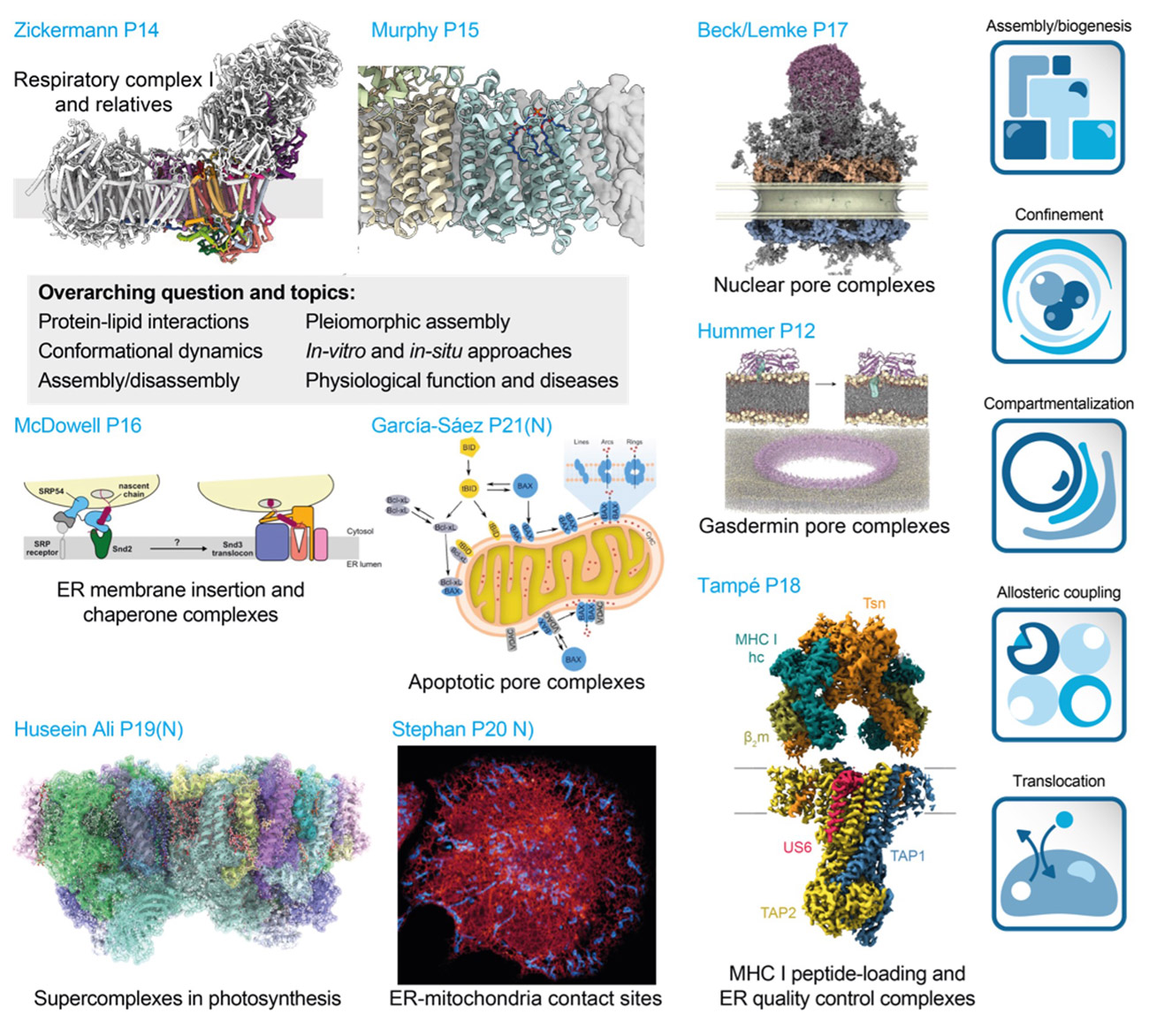
The assembly and disassembly, variation in stoichiometry and subunit composition, conformational dynamics, regulation and modulation in cellular conditions, in-situ supramolecular organization, and physiological function and disease will be investigated by integrative approaches. The CRC projects apply a combination of in-vitro and in-situ approaches ranging from cryo-EM, X-ray crystallography, nuclear magnetic resonance spectroscopy, and native mass spectrometry to super-resolution microscopy, single-cell biochemistry, and molecular dynamics simulations.